

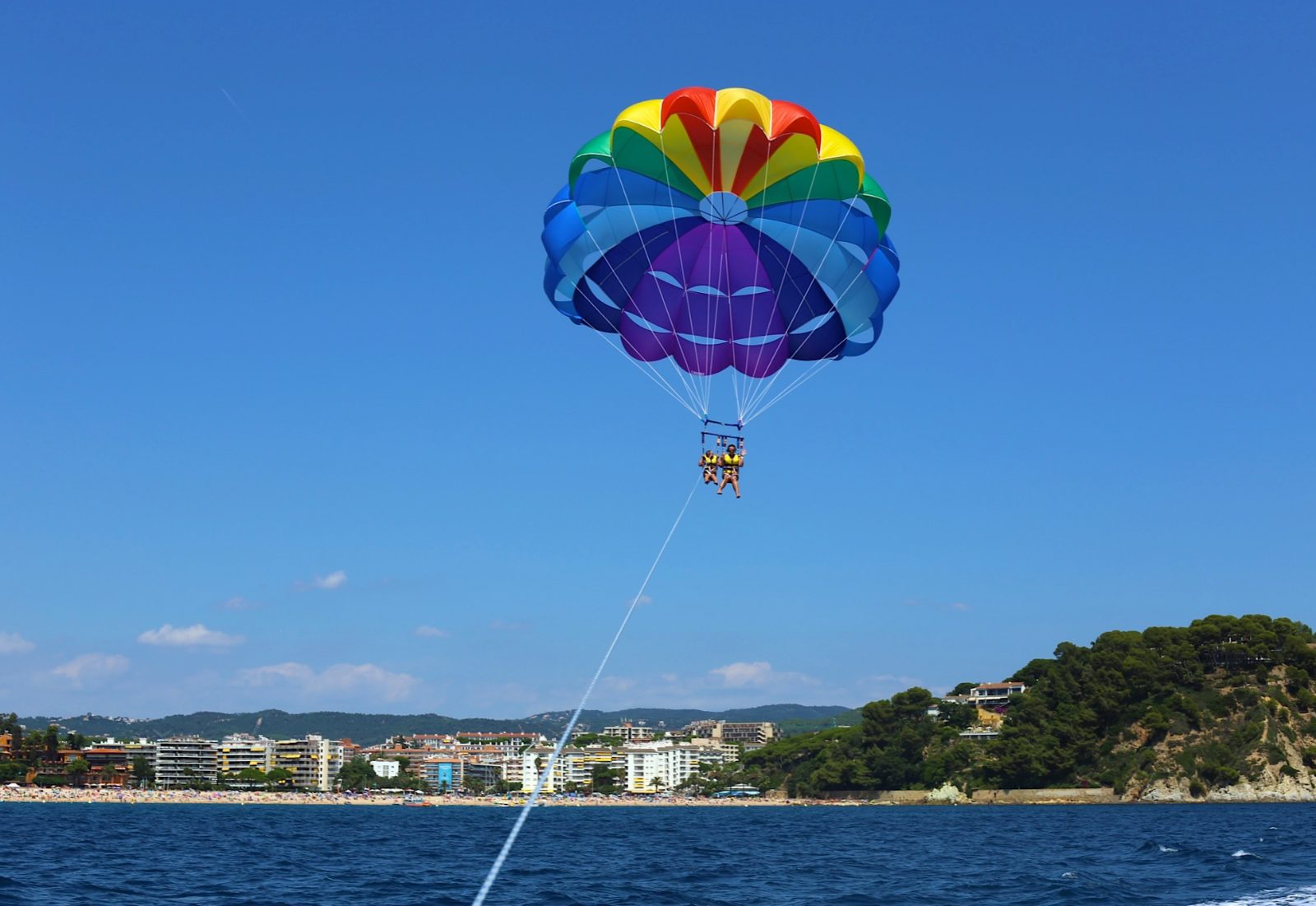
Quick answer
Parasailing safety tips in Salou center on three checkpoints: confirm your operator holds a valid nautical activity license from the Generalitat de Catalunya, inspect your harness and tow-line attachment points before boarding, and verify wind speeds remain below 20 knots with clear visibility. Licensed operators at Playa de Levante conduct mandatory safety briefings covering hand signals, emergency water entry procedures, and harness release mechanisms. Flights operate daily from 10:00 to 17:00 when sea conditions permit, with the 10:00–16:00 window offering the most stable weather patterns.
The tow-line connecting parasail canopy to boat stretches 60 to 80 meters, and a single frayed section or corroded carabiner can compromise the entire system. Licensed operators in Salou replace tow-lines every 200 flight hours and retire harnesses after two seasons, but passengers should still run a visual check before departure. Look for even stitching on webbing straps, smooth-operating buckles without rust or cracks, and metal connectors that close with an audible click. If a crew member rushes the equipment check or dismisses questions about maintenance logs, that is sufficient reason to walk away. Weather briefings happen 30 minutes before scheduled flights, when captains assess wind speed, wave height, and cloud ceiling. Parasailing remains grounded when sustained winds exceed 20 knots or gusts reach 25 knots, conditions that create unpredictable canopy inflation and increase collision risk with the tow vessel. Morning departures between 10:00 and midday benefit from lighter thermal activity and calmer sea states, while late-afternoon slots may face strengthening onshore breezes. Operators cancel flights without penalty when conditions deteriorate, a policy that protects both crew and passengers from forcing marginal weather windows. The pre-flight briefing covers four emergency scenarios: canopy collapse, tow-line separation, unplanned water entry, and communication failure with the boat. Crew demonstrate how to activate the quick-release buckle on the harness chest strap, the correct body position for water impact with knees bent and arms crossed, and the hand signals for immediate descent or continued flight. Passengers wearing prescription glasses should secure them with a retention strap, and those with shoulder or back injuries must disclose these conditions before boarding, as the harness applies significant load during ascent and landing transitions. The 15-minute flight reaches altitudes between 30 and 50 meters, where perspective shifts rapidly and motion sensitivity can trigger vertigo in predisposed individuals. Salou's parasailing season runs from late March through October, with July and August bringing peak demand and tighter scheduling. Booking the first morning slot reduces wait times and guarantees the calmest conditions, while midweek departures avoid weekend crowding at Playa de Levante. Operators require participants to weigh at least 45 kilograms and be at least 6 years old, with tandem flights accommodating two passengers up to a combined weight of 150 kilograms. The 70 EUR per-person rate includes all safety equipment, the boat transfer, and the flight itself, with no hidden fees for harness upgrades or photo packages.
“A frayed tow-line or corroded carabiner can compromise the entire system, making pre-flight equipment checks a passenger's responsibility, not an optional courtesy.”
Core Parasailing Safety Tips and Conduct
Parasailing safety depends on following crew instructions and maintaining proper physical positioning throughout your flight. Respecting equipment protocols and communication signals ensures both your security and smooth operations for all participants.
Do
- Listen carefully to the full safety briefing before boarding
- Wear the harness exactly as the crew demonstrates
- Keep your body relaxed and legs extended during takeoff
- Signal the crew immediately if you feel unwell
- Follow hand signals for communication while airborne
- Wait for the crew's all-clear before standing after landing
Don't
- Don't adjust harness straps or equipment once fitted by crew
- Don't lean forward or grab the tow rope during flight
- Don't bring loose items that could fall into the water
- Don't attempt to board if you've consumed alcohol
- Don't ignore weight or health restriction warnings
- Don't remove your life jacket until back on solid ground
Preparation Checklist for Parasailing Safety Tips
Before heading to Playa de Levante, confirm a few practical items to ensure a safe and comfortable parasailing experience.
-
Check the weather forecast online — Wind speeds above 25 km/h or storms can cancel flights for safety reasons.
-
Wear secure, close-fitting swimwear — Loose clothing or accessories may catch wind or come off during the flight.
-
Apply waterproof sunscreen before departure — You'll be exposed to direct sun and reflected UV from the sea for 15 minutes.
-
Bring sunglasses with a retaining strap — Protect your eyes from glare without risking them falling into the water.
-
Secure or leave valuables onshore — Phones, jewelry, and wallets should stay in a locker or with a companion on the beach.
-
Confirm your booking slot the day before — Operators may adjust schedules based on tide or wind conditions.
-
Arrive 15 minutes before your slot — This allows time for the safety briefing and harness fitting without delaying your group.
Operational Hours for Parasailing Safety Tips
The parasailing operations in Salou maintain a consistent schedule throughout the week to ensure visitors can plan their activity within regulated timeframes.
| Monday | 10:00–17:00 | |
|---|---|---|
| Tuesday | 10:00–17:00 | |
| Wednesday | 10:00–17:00 | |
| Thursday | 10:00–17:00 | |
| Friday | 10:00–17:00 | |
| Saturday | 10:00–17:00 | |
| Sunday | 10:00–17:00 |
Arrival Guidance for Parasailing Safety Tips
The parasailing departure point is located at Playa de Levante, situated along the Passeig de Jaume I in Salou. Visitors can easily access this beach area via local transport or by walking along the main promenade.
Follow signs for Salou Centro towards the beachfront on Passeig de Jaume I
Plana bus lines serving the Salou beachfront stops
Walk along the main promenade of Passeig de Jaume I
Request drop-off at Playa de Levante, Passeig de Jaume I
Check availability
Frequently asked questions about parasailing safety tips
Everything you need to know about parasailing safety tips